
Three confirmed events in June 2026, each meaningful on its own, combine to create a specific utility cost and water access risk for manufacturers operating in El Paso. The gap between them is the operational decision.
What Happened in Northeast El Paso
El Paso Matters reported that on June 4, 2026, El Paso City Manager Dionne Mack and City Attorney Karla Nieman issued a joint statement confirming the city cannot legally cancel its Chapter 380 tax break contract with Meta Platforms, Inc. The El Paso City Council approved that agreement in December 2023. City Rep. Josh Acevedo placed a termination vote on the June 9 Council agenda, but the city's own legal office confirmed the contract is binding.
On June 15, 2026, the El Paso Times reported that El Paso Water is selling 592 acres of vacant land in Northeast El Paso, adjacent to the Meta data center site, for $8 million. A concrete supply company owned by Stanley Jobe won the bid, outbidding El Paso Electric for the parcel. Related: Abbott's Data Center Directive Opens a Narrow Audit Window for Texas Manufacturers on Utility Contracts and Grid Access
One week earlier, on June 10, 2026, Governor Abbott directed PUC and ERCOT to require data centers to fully fund their own electric infrastructure costs, preventing those costs from being passed through to ratepayers. Abbott directed a joint ratepayer protection memorandum by July 17, 2026, and PUC transmission cost reduction action by July 31, 2026. His directive also cited water consumption by data centers as a community-level concern alongside electricity costs.
The Infrastructure Dependency This Exposes
El Paso Electric is not part of ERCOT. It operates under a separate regulatory regime serving the El Paso area. Abbott's June 10 directive is addressed specifically to PUC and ERCOT — it does not reference El Paso Electric. The requirement that data centers self-fund infrastructure costs, which would protect existing industrial ratepayers from new generation and transmission expense, is not confirmed to cover this market.
If El Paso Electric needs to build new generation or transmission capacity to serve Meta's reported 1-gigawatt load, it would typically recover those costs through a general rate case filed with the Public Utility Commission of Texas. That proceeding would affect all customer classes on the grid, including industrial manufacturers. Once a rate case is filed, the negotiating dynamic changes. Manufacturers who have not reviewed their rate class, demand charge structure, and service agreement terms before that proceeding opens will be reacting, not planning.
El Paso Water's land sale adds to the risk picture. The utility sold 592 acres adjacent to the Meta site rather than retaining that land for future water infrastructure. Whether that decision reflects confidence in long-term regional water supply capacity or a reorientation toward hyperscaler-adjacent development is not confirmed by available sources. What is confirmed: El Paso Water is actively managing land in the Northeast corridor directly adjacent to the data center footprint. Water-intensive manufacturers — food processors running cleaning-in-place cycles, chemical operations with cooling towers, metal fabricators with quench and rinse systems — should not assume current industrial water allocations are insulated from that dynamic.
Texas Agriculture Commissioner Sid Miller publicly called for pausing data center development in Texas, citing water and power strain. That position has not translated into confirmed policy or legislative action, but its emergence at the state level confirms that water competition between hyperscalers and industrial users is now a recognized political issue, not just an operational one.
Which Operators Are Most Exposed
The clearest exposure sits with manufacturers where water or power is a direct production input, not just facility overhead.
- Food and beverage processors using El Paso Water for cleaning-in-place, cooling, or ingredient-grade water face both supply and cost risk if industrial allocations tighten.
- Chemical manufacturers with cooling towers or process water loops carry high water intensity per production hour. Rate or allocation changes translate directly to operating cost.
- Metal fabricators with quench tanks, surface treatment lines, or parts washing operations face the same exposure.
- Advanced manufacturers with precision temperature control or clean-room humidity requirements have power demand profiles that make demand charge increases material.
For these operators, utility costs likely represent 8–15% or more of total operating cost. A rate case outcome that adds 10–20% to electricity costs, or a water rate adjustment that passes regional demand increases onto industrial customers, flows directly to margin.
Planning Assumptions to Revisit
Two assumptions embedded in most mid-market operating plans deserve immediate scrutiny.
First: that current El Paso Electric rate structures reflect stable forward costs. They may not, if new generation capacity is needed to serve Meta's load and those costs enter the rate base.
Second: that El Paso Water industrial rates and allocations are independent of hyperscaler competition. The land sale does not confirm that industrial allocations will be reduced, but it confirms that water infrastructure planning in Northeast El Paso is active and adjacent to a large new demand source. Treating current water costs as fixed for 3–5-year financial planning purposes is a risk the available evidence does not support.
What to Audit Now
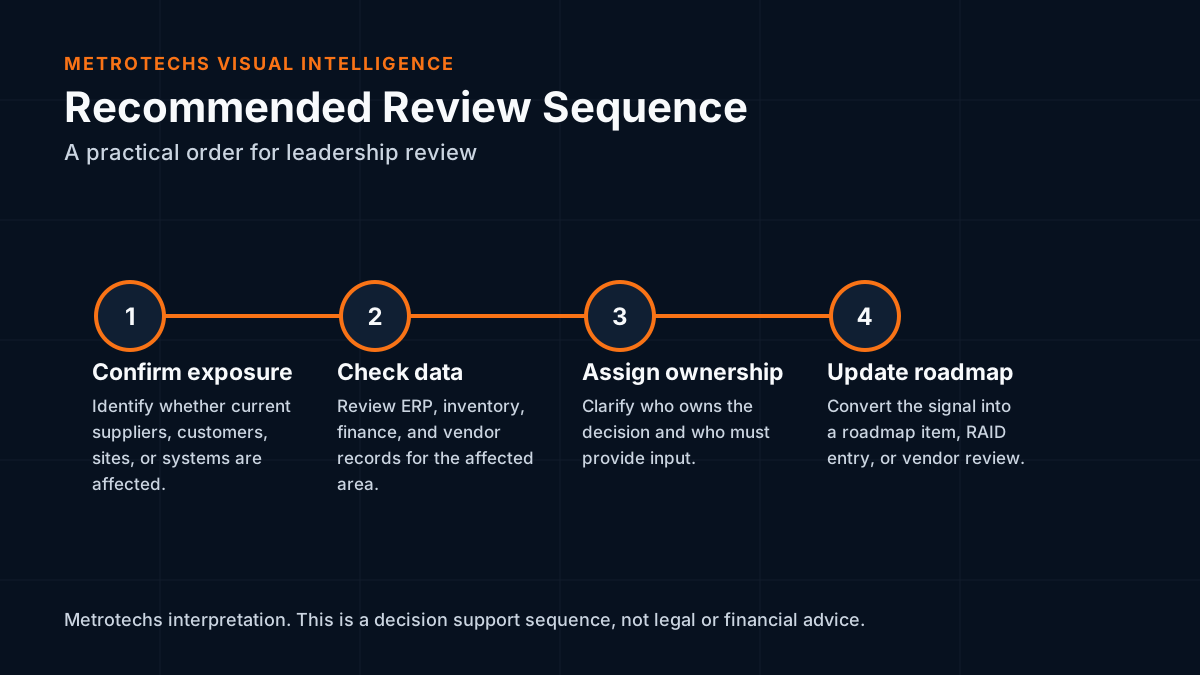
Pull these documents and answer these questions before a rate case is filed or allocation policy is revised:
El Paso Electric rate schedule: What is your current rate class — industrial, large commercial, or interruptible? What is your demand charge structure? Are you on a fixed rate or subject to general rate case adjustments? Does your service agreement contain any infrastructure surcharge or cost-pass-through provision outside a formal rate case?
El Paso Water industrial service agreement: What is the contract term and renewal date? Does the agreement include price escalation clauses tied to regional demand? What is your committed allocation volume, and does the agreement specify curtailment provisions?
24-month utility billing history: Pull demand charges, consumption trends, and rate adjustments over the past two years. Establish whether costs have already been drifting before any new rate case opens.
Utility cost as a percentage of COGS: A 15% increase in electricity and water costs hits differently at 5% of COGS than at 18% of COGS. Know your number before the proceeding opens.
On-site water efficiency and demand response capability: Does your facility have closed-loop or water recirculation systems? Any demand response or interruptible service agreement that could qualify for bill credits? If not, establish what baseline installation would cost.
ERCOT coverage gap — document this in writing: Verify that El Paso Electric is outside ERCOT and therefore outside the scope of Abbott's June 10, 2026 directive. This is a material planning assumption difference from manufacturers on the Dallas–Fort Worth, Houston, or Austin corridors. It belongs in CFO and board briefings now.
What to Watch Through the Rest of 2026
- July 17, 2026: PUC and ERCOT joint memorandum on ratepayer protection due per Abbott's directive. Watch whether any language in that document is extended or referenced in El Paso Electric proceedings.
- July 31, 2026: PUC transmission cost reduction action deadline. Same monitoring question.
- El Paso Electric PUCT docket activity: A general rate case filing that references new generation or transmission capacity for large load interconnections is the specific trigger. Monitor the Public Utility Commission of Texas docket system for El Paso Electric filings.
- El Paso Water rate or allocation announcements: Any public notice of an industrial rate adjustment or Northeast El Paso capacity study is a direct signal.
- Chapter 380 confirmation: The June 4 legal opinion that Meta's contract is binding removes the only near-term check on construction pace. That accelerates the timeline on every utility pressure described above.
Manufacturers who complete the utility contract and billing review before a rate case opens will have the factual foundation to negotiate, respond, or invest from a position of knowledge. Those who defer will be reading rate case filings cold.