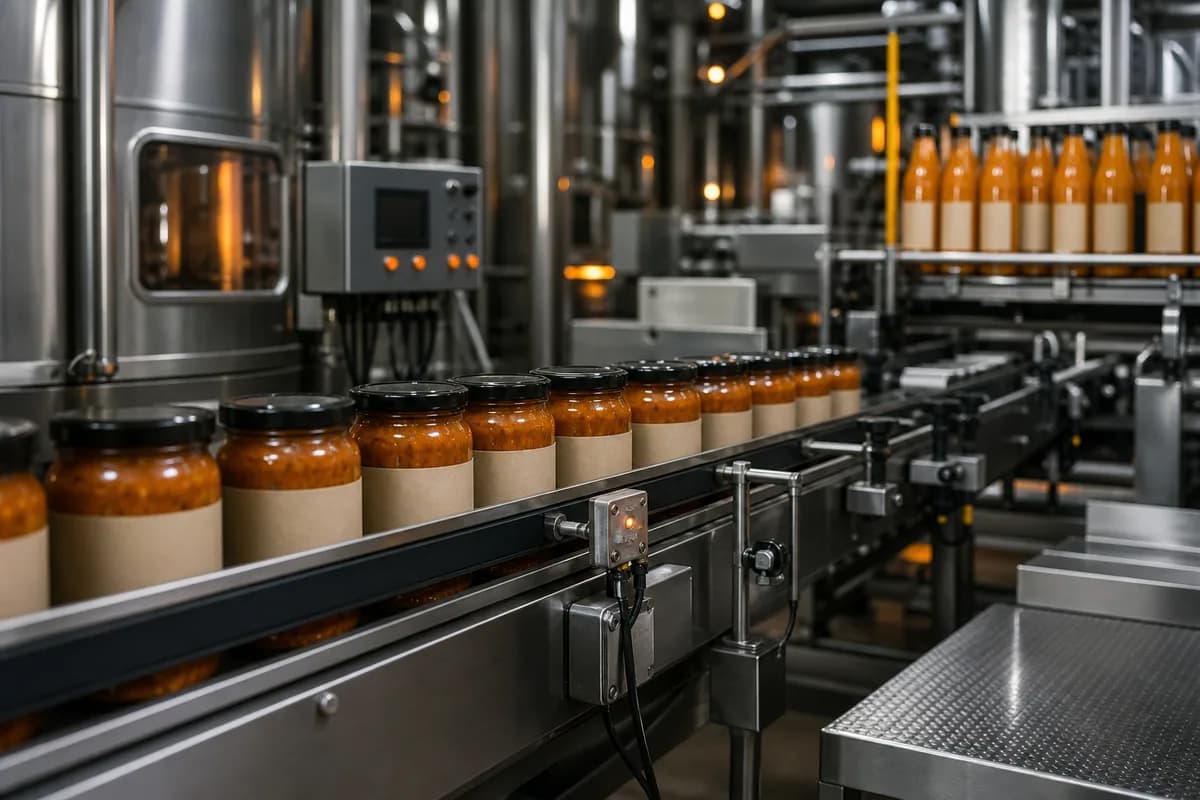
One recall can end your business. How ready are you?
Food and beverage manufacturers carry compliance risk that compounds every day lot tracking runs through spreadsheets. The companies that come out of a recall intact are the ones whose systems can answer the FDA's questions in minutes, not days.
Manual lot tracking
Spreadsheets and disconnected systems mean a recall triggers a fire drill instead of a trace. The FDA's 4-hour window doesn't leave room for manual reconstruction.
Compliance by exception
FSMA and HACCP requirements get managed reactively — documentation assembled before an audit rather than generated through normal operations.
Cold chain gaps
Temperature deviations go unresolved because monitoring is siloed from the ERP. Evidence of chain-of-custody is incomplete when you need it most.
Recalls become manageable instead of catastrophic
When lot-level traceability runs through your ERP, a forward-and-backward trace takes minutes. You know exactly which customers received which batches, which lots to hold, and what your exposure is — before the regulators ask.
Audits become evidence retrieval, not reconstruction
Compliance documentation is generated as a byproduct of normal production. Batch genealogy, allergen segregation logs, and FEFO rotation records exist automatically — not because someone prepared them for an auditor.
Inventory decisions improve with better data
Shelf-life optimization and perishable demand forecasting work when the underlying batch data is clean and structured. Spoilage drops. Overproduction drops. The system works with your production instead of around it.
Operations teams stop managing spreadsheets
When label generation, compliance documentation, and lot tracking are automated, the people who used to maintain those spreadsheets are free to work on higher-value problems. Most clients recapture 15–20 hours per week.
- →Food and beverage manufacturers, $10M–$150M revenue
- →Companies subject to FSMA, HACCP, or FDA traceability requirements
- →Operations with perishable inventory, cold chain requirements, or allergen management
- →Organizations where a recall would be brand-threatening, not just operational
Assess current state
We map your existing lot tracking, ERP data structure, cold chain monitoring, and compliance workflows. We quantify the gap between your current traceability capability and what a recall or audit would actually require.
Design the operating model
Before any configuration begins, we define how batch genealogy, allergen segregation, FEFO rotation, and label generation will work inside your ERP. The model is documented and agreed before implementation starts.
Govern delivery
We manage implementation against the agreed design. Every phase is validated against the recall readiness and compliance benchmarks defined in phase one — so the finished system actually delivers what was promised.
Recall Readiness Assessment
Measures your ability to execute a full forward-and-backward trace within the FDA's 4-hour window. Identifies every manual step that creates exposure and translates each gap into dollar-denominated risk.
Cold Chain Gap Analysis
Reviews temperature logging, cold chain monitoring, and deviation response workflows against FSMA and HACCP requirements. Identifies where chain-of-custody evidence breaks down.
Compliance Infrastructure Review
Evaluates how your current systems generate, store, and retrieve compliance documentation. Identifies whether your records are audit-ready or assembled on demand.
Every engagement starts with an assessment.
Before we recommend anything, we quantify the cost of your current state. The assessment tells you what the problem is worth — and whether solving it makes sense.
Start Your Assessment