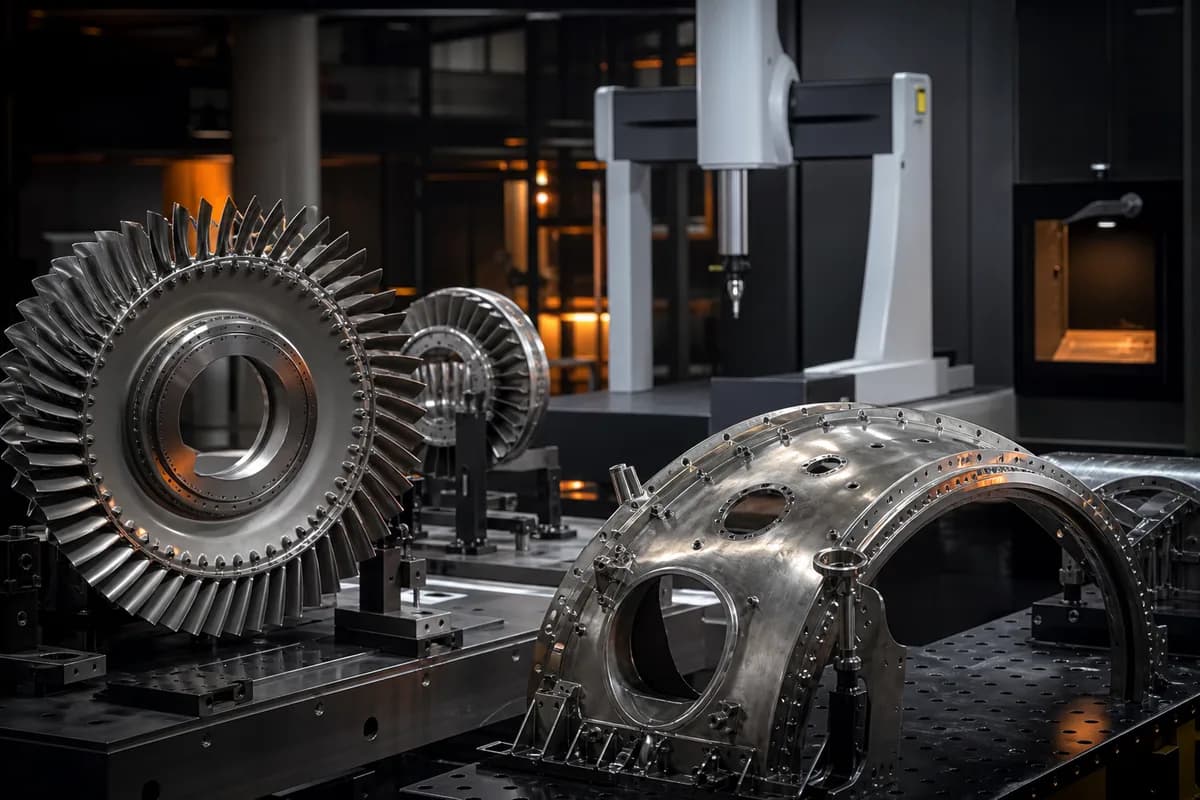
Precision medical-device components undergoing optical quality inspection
Medical Devices Supply Chain

Connect product, supplier, quality, traceability, and delivery records.

Metrotechs delivers Supply Chain Digital Transformation for mid-market medical-device manufacturers. Through Business Systems Engineering, we improve people, processes, information, and systems using ERP, Cloud, Data, and AI where they strengthen controlled product records, supplier coordination, employee work, traceability, operating decisions, and customer commitments.

Business Systems Engineering for Supply Chain Digital Transformation in mid-market medical-device manufacturing.

What changes
Governed product and supplier records

Connect approved specifications, revisions, supplier status, components, inspection requirements, documents, and effective dates.

Connected production and release evidence

Relate material lots, work records, inspections, nonconformances, approvals, identifiers, serials or lots, and shipments.

Visible changes and exceptions

Carry approved supplier, product, quality, label, document, order, complaint, and return changes through accountable workflows.

Where continuity breaks

Where medical-device supply-chain systems lose continuity.

Controlled product records, supplier evidence, components, lots, production records, inspection results, nonconformances, release evidence, identifiers, labels, complaints, returns, shipments, and customer commitments often live in separate systems. The break occurs when those records no longer support the same approved product, lot or serial relationship, order, or qualified decision.

  1. 01

    Product, supplier, and quality records drift

    Approved product specifications, revisions, supplier status, component records, inspection requirements, training evidence, and effective dates may be maintained across quality systems, documents, spreadsheets, supplier files, and ERP. Purchasing, production, quality, and customer-facing teams can then act from different versions of the same requirement.

  2. 02

    Traceability evidence separates from production and release

    Material lots, components, work records, inspections, nonconformances, approvals, device or package identifiers, serial or lot records, and shipment details often cross multiple systems. Quality teams must reconstruct the relationship when reviewing a release, complaint, return, or investigation.

  3. 03

    Changes and exceptions do not reach every affected record

    A supplier change, product revision, deviation, corrective action, or customer requirement can affect purchasing, inventory, production instructions, inspection, labels, controlled documents, open orders, and delivery. Fragmented systems make the impact difficult to see and govern.

What gets better

What connected business systems make possible.

Business Systems Engineering connects the ERP foundation to approved product, supplier, purchasing, inventory, production, quality, traceability, document, order, complaint, return, shipment, and delivery data so employees can work from reliable information and qualified owners can review evidence and make accountable decisions.

Keep controlled product and supplier records aligned

Define which system and qualified owner governs product, revision, supplier, component, inspection, training, document, and effective-date records, then deliver approved information to ERP and connected workflows.

Connect production and release evidence

Relate material lots, components, work records, inspections, nonconformances, approvals, identifiers, serial or lot records, and shipment information so qualified owners can review completeness from governed records.

Carry approved changes through the supply chain

Connect supplier, product, quality, document, label, purchasing, inventory, production, order, and delivery changes through accountable reviews, decisions, and acknowledgements.

Apply Cloud, Data, and AI to controlled work

Use governed cloud data for authorized records, reporting, traceability views, document access, and exception review. Where suitable, AI can extract approved fields, compare documents, or summarize exceptions for qualified human review.

Precision medical-device components undergoing optical quality inspection
Manufacturing Industry

For mid-market medical-device manufacturers with controlled records and traceability handoffs.

Metrotechs implements or improves the ERP foundation and connects the authorized business information around it across products, suppliers, materials, production, quality, traceability, documents, orders, complaints, returns, shipments, and delivery. Device design, regulatory strategy and submissions, quality-system ownership, risk management, clinical work, validation strategy and approval, quality and release decisions, laboratory testing, audit representation, and legal or regulatory interpretation remain with qualified specialists.

01

Manufacturers implementing or modernizing an ERP foundation

You need product, supplier, purchasing, inventory, production, quality, order, shipment, and financial records organized around a dependable business-system foundation.

02

Teams connecting controlled product and supplier records

You need approved specifications, revisions, supplier status, components, inspection requirements, labels, documents, and effective dates governed at the source and delivered to authorized systems.

03

Manufacturers improving lot and serial traceability

You need material, component, work, inspection, release, identifier, lot or serial, shipment, complaint, and return relationships connected without replacing qualified review.

04

OEMs coordinating contract partners and customers

You need approved requirements, changes, evidence, acknowledgements, orders, shipments, complaints, returns, and delivery information exchanged through authorized and supportable methods.

From evidence to engineering

Business Systems Engineering from problem to working system.

Start with one controlled-record or traceability problem, define the ERP foundation and connected architecture, then implement the smallest practical solution that improves the work.

  1. 01

    Define the product, traceability, and system boundaries

    We follow a representative supplier change, product revision, material lot, production record, quality exception, release review, order, complaint, return, or shipment from approved requirement through purchasing, production, quality, delivery, and follow-up. We identify the people, records, applications, manual work, and partner handoffs that affect the customer commitment.

    • Supplier, manufacturer, contract-partner, employee, customer, and carrier handoffs
    • Product, revision, supplier, lot, serial, quality, document, order, complaint, return, and delivery records
    • Current applications, controlled documents, integrations, access, and manual work
  2. 02

    Design the ERP and connected-system architecture

    We evaluate the ERP foundation and any proposed platforms against approved business requirements supplied by qualified owners. We define record authority, system roles, architecture, integration boundaries, access controls, cloud services, data flows, reporting, workflows, and AI support before accepting responsibility for the technical scope.

    • Business and technical fit of proposed systems and providers
    • ERP, product, supplier, production, quality, traceability, document, order, complaint, return, and delivery record ownership
    • Integration, Cloud, Data, security, access, retention, and AI boundaries
  3. 03

    Build, validate, and support the working system

    We configure, develop, integrate, test, and launch the agreed solution with the people who use and approve it. We provide the documentation, training support, and ongoing technology support included in the engagement.

    • Phased ERP, controlled-data, integration, document, portal, and software delivery
    • Revision, traceability, workflow, permission, data, and user acceptance testing with qualified owners
    • Documentation, training support, and measured improvement
What we review first

Start with the ERP and evidence behind the product and order.

A focused systems review determines whether the right response is ERP implementation or improvement, controlled product and document architecture, integration, cloud infrastructure, governed data, traceability reporting, partner visibility, workflow software, or a defined AI use.

Product, supplier, and document continuity
Review how approved specifications, revisions, supplier status, component records, inspection requirements, labels, training evidence, controlled documents, and effective dates are owned and delivered across quality, document, ERP, partner, and customer systems.
Production and traceability continuity
Trace materials, components, lots, serials, work records, inspections, nonconformances, approvals, release evidence, identifiers, shipments, complaints, and returns across the current systems.
Change and exception visibility
Follow a supplier, product, quality, document, label, order, complaint, or return exception to identify missing information, duplicate entry, unclear ownership, unacknowledged changes, and unresolved decisions.
Supply chain service context

Business Systems Engineering for medical-device supply chains.

Every engagement establishes the ERP foundation by implementing, improving, or integrating it. Controlled product data, documents, traceability views, partner access, Cloud, Data, AI, integration, reporting, and custom software are added only where the approved supply-chain work requires them.

What you receive

A practical path from system definition to implementation.

A focused first engagement defines the system work and produces the artifacts needed to begin delivery. Metrotechs can then configure, develop, integrate, launch, and support the approved technology scope.

  1. 01

    Current system and data map

    Trace the selected supplier change, product revision, lot or serial relationship, production record, quality exception, release review, order, complaint, return, or shipment through ERP and the connected product, supplier, inventory, production, quality, traceability, document, order, complaint, return, shipping, and customer records. Identify missing data, duplicate entry, unclear ownership, and broken handoffs.

    Systems, records, integrations, access, and visibility gaps
  2. 02

    Workflow and information requirements

    Define what each authorized role needs to see, which validations, requests, alerts, reviews, approvals, holds, releases, changes, or acknowledgements should move through the system, who makes each decision, and what information supports the controlled product record, qualified decision, and customer commitment.

    Workflow, role, access, validation, decision, and reporting requirements
  3. 03

    ERP and connected-technology blueprint

    Define what the ERP should own, how product, supplier, inventory, production, quality, traceability, document, order, complaint, return, shipping, and customer systems exchange approved data, where cloud services and reporting fit, and whether a specific human-reviewed AI use is practical.

    Technology architecture and implementation requirements
  4. 04

    Practical implementation plan

    Sequence the approved ERP, controlled product-data, document, traceability, partner-access, integration, cloud, data, reporting, workflow, software, and AI work into manageable increments that fit the manufacturer's qualified owners, systems, priorities, and budget.

    Prioritized Roadmap, scope, and implementation backlog
How we engage

Start with one controlled record and define the right build.

The first engagement is focused enough for a mid-market team to participate and specific enough to define responsible ERP, Cloud, Data, AI, controlled product-data, document, traceability, partner-access, integration, workflow, or software work. It requires an accountable sponsor and the qualified owners of the products, processes, systems, data, decisions, and adoption.

Representative operating case

An approved supplier or product change should reach every affected record before qualified release.

This example shows the kind of operating result the work is designed to produce. It is an illustrative scenario, not a claim about a specific client, regulatory compliance, product safety, or guaranteed performance.

01 / Before

The approved change and affected evidence live in separate systems.

A qualified owner approves a supplier, component, product, inspection, label, or document revision. Purchasing, inventory, production, quality, customer service, and shipping cannot immediately see which approved records, lots, work, evidence, orders, and shipments are affected.

02 / Engineer

Connect the approved change to the product, evidence, and order.

Define authoritative product, supplier, component, revision, approval, and effective-date records, then connect them to purchasing, inventory, production, inspection, quality, controlled documents, identifiers, open orders, traceability relationships, and shipments.

03 / Operate

Give qualified owners one accountable change path.

Affected records, work, orders, constraints, owners, approvals, evidence, acknowledgements, and customer updates are visible together. Qualified teams retain responsibility for regulatory, risk, validation, quality, release, product-safety, and compliance decisions.

The actual response may use an existing ERP and quality or document systems, targeted data work, integration, reporting, a controlled portal, workflow software, or a phased platform change. Approved requirements and qualified ownership determine the architecture.

Delivery responsibility

Keep the technology scope and responsibilities clear.

We define a practical IT scope around the manufacturer's medical-device supply-chain, controlled-record, or traceability problem and make clear which work belongs to Metrotechs, the manufacturer's qualified team, business partners, and specialist providers.

MetrotechsBusiness Systems Engineering
Evaluate proposed systems, define the architecture, record authority, integration boundaries, access controls, technical risks, and support model, then configure, develop, connect, and support the agreed ERP, Cloud, Data, AI, controlled product-data, document, traceability, partner-access, reporting, workflow, and software scope.
ManufacturerBusiness decisions and qualified ownership
Provide an accountable sponsor, process, data, and system owners, qualified product, regulatory, quality, supplier, procurement, production, document-control, customer-service, and shipping personnel, approved requirements, access to authorized systems and records, timely decisions, validation, training participation, partner coordination, and ongoing ownership after launch.
SharedAccess, testing, adoption, and continuity
Agree authorized access, confidentiality, security, retention, electronic-record expectations, acceptance checks, user responsibilities, partner participation, training, documentation, support, recovery, and the measures used to evaluate the technology change.
Specialists and providersRegulatory, quality, validation, product, and testing boundaries
Regulatory and quality leaders, product and risk engineers, validation specialists, testing laboratories, certification and conformity bodies, auditors, legal counsel, contract manufacturers, and existing software vendors retain their professional, technical, regulatory, service, and product responsibilities. Metrotechs coordinates only the interfaces and IT work included in the agreed scope.
Questions before you engage

Questions that shape a responsible starting point.

The first conversation should clarify fit, qualified ownership, product and process boundaries, authorized systems, partner participation, evidence, confidentiality, and constraints before anyone assumes a platform, timetable, or implementation scope.

Do we need to have an ERP already?

No. Metrotechs can implement an ERP foundation or improve and integrate the ERP you already use. We determine what the ERP should own, what belongs in connected product, supplier, production, quality, traceability, document, order, complaint, return, shipping, or customer systems, and which Cloud, Data, AI, integration, portal, document, reporting, workflow, or software work the approved supply-chain problem requires.

Can you implement a system or product we have already selected?

Yes, when it is technically, operationally, and contractually suitable. We review the proposed system or provider against approved business requirements, existing architecture, record authority, data ownership, authorization, confidentiality, integration needs, security, retention, support, and implementation risk before accepting responsibility for the technical work.

Can you connect ERP, quality, document, supplier, production, and traceability systems?

Yes, when the systems provide an authorized and supportable exchange method. The design can combine APIs, EDI, portals, structured files, controlled forms, document workflows, and accountable manual steps while defining record authority, validation, access, monitoring, correction, and retention.

Can suppliers, contract manufacturers, laboratories, distributors, and customers participate?

Yes, where the parties and systems support an authorized exchange. We can define how approved product, supplier, change, quality, traceability, document, order, complaint, return, shipment, and delivery information moves through APIs, EDI, controlled portals, structured files, or accountable manual steps while protecting access and clarifying ownership.

Where does AI fit?

AI is considered for defined work such as extracting approved fields, comparing documents, suggesting classifications, finding missing information, summarizing exceptions, or assisting a review. It depends on suitable source data, authorized use, confidentiality controls, clear evaluation criteria, and qualified human review. It does not make device-design, regulatory, risk, validation, product-safety, quality, release, audit, or compliance decisions.

Can we start with one urgent record or traceability problem?

Yes. A representative supplier-record gap, product revision conflict, missing lot or serial relationship, incomplete production or quality record, document change, order exception, complaint, return, or shipment question is often the best starting point. It gives the team evidence for deciding whether the next step is focused engineering, a broader Roadmap, or no project yet.

Does Metrotechs provide regulatory consulting, quality-system ownership, validation approval, or product certification?

No. Metrotechs engineers and implements business systems around requirements and decisions supplied by qualified owners and providers. Device design, regulatory strategy and submissions, quality-system ownership, risk management, clinical work, validation strategy and approval, quality and release decisions, laboratory testing, audit representation, product certification, and legal or regulatory interpretation remain with the manufacturer and its qualified specialists.

Choose a practical starting point

Start with the product, supplier, traceability, or order record your teams cannot connect cleanly.

Bring us a supplier-record gap, product revision conflict, missing lot or serial relationship, incomplete production or quality evidence, document change, order exception, complaint, return, or shipment question that your teams cannot see or resolve cleanly. We will trace its effect on the operating flow and customer commitment, then define a practical technology starting point.