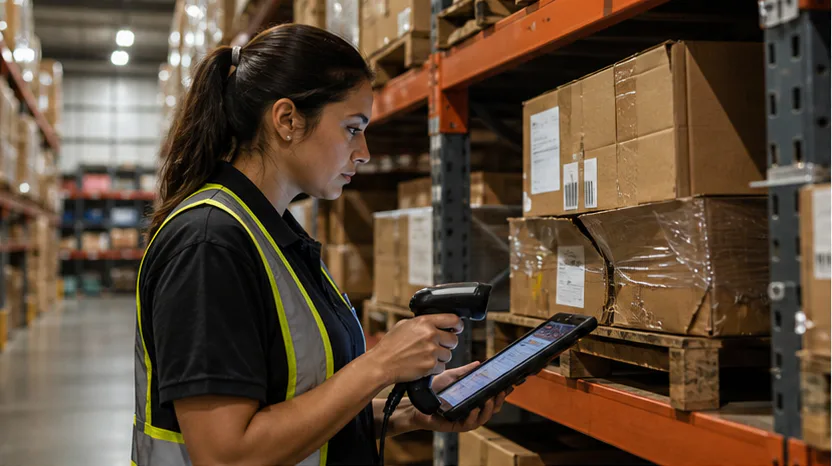
Available inventory is unclear
Sales, ERP, warehouse, and ecommerce records disagree on what finished goods are available, allocated, held, or ready to ship. Teams make a customer promise without knowing whether the stock can fulfill it.


For manufacturers, distribution connects the order to finished-goods inventory, warehouse work, carriers, 3PLs, delivery confirmation, and customer status. Metrotechs assesses that flow in Launchpad and engineers the approved change.
Distribution is not a separate promise to the customer. It is the part of the manufacturer’s flow that turns available product into an accurate shipment, dependable status, and a resolved delivery.
Sales, ERP, warehouse, and ecommerce records disagree on what finished goods are available, allocated, held, or ready to ship. Teams make a customer promise without knowing whether the stock can fulfill it.

Orders, allocations, pick instructions, shipment events, and customer updates move through ERP, WMS, TMS, ecommerce, EDI, and partner systems. Manual re-entry or delayed integrations leave the next team working from an incomplete promise.
Trusted records and clear ownership come first. Self-service, automation, and AI can help once the operating flow can support them.
Connect the manufacturer’s order, allocation, inventory, warehouse, shipment, and service records so employees can see what was promised and what is happening now.
Show which orders a shortage, hold, missed pick, carrier change, or return affects, who owns the response, and when the customer needs an update.
Give customers and dealers permissioned access to availability, order status, shipment events, documents, and return progress only where the underlying records are dependable.
Use Launchpad to assess the flow, evidence, owners, and readiness. Then sequence the approved WMS, TMS, ERP, data, integration, portal, or AI work through Business Systems Engineering.
Launchpad uses the Order-to-Door Framework to map the manufacturer’s Order-to-Delivery process. That analysis shows where inventory, fulfillment, partner handoffs, and customer communication need change before engineering begins.
Inside Launchpad, trace the order from capture and allocation through warehouse execution, handoff to the carrier or 3PL, delivery confirmation, returns, and service. Include the exception paths, not only the ideal path.
Identify the systems and teams responsible for order, item, inventory, warehouse, shipment, and customer-status events. Make stale data, duplicate entry, missing permissions, and integration failures visible.
The Roadmap prioritizes operational changes and the engineering needed to deliver them. A portal, automation, or AI assistant is useful only when its source records and exception rules can be trusted.
Business Systems Engineering implements the approved work while Launchpad tracks dependencies, owners, risks, and evidence that the new flow is working for employees and customers.
Review the evidence behind availability, warehouse execution, delivery events, and customer status before changing systems or adding automation.
Review how the manufacturer records demand, customer commitments, item information, allocation, holds, finished-goods inventory, and changes to the promised date. Confirm who owns each record and when downstream teams see updates.
Assess WMS work from putaway and location accuracy through picking, packing, shipping, returns, and cycle counts. Follow shortages, damage, substitutions, and rework because exceptions expose the real operating gaps.
Review TMS, carrier, and 3PL handoffs: labels, pickup, tracking events, proof of delivery, failed delivery, and claims. Determine which events change the customer promise and who responds.
Trace the records behind customer and dealer status, documents, alerts, and self-service. Confirm permissions, freshness, exception ownership, and whether a dashboard or AI response can be traced to a dependable source.
Metrotechs selects the necessary ERP, data, workflow, and customer-experience work after the Order-to-Delivery assessment. These are implementation capabilities, not standalone IT offers.
Turn the accepted promise into a complete, validated operating commitment downstream teams can trust.
Review service contextSupply Chain service · OrchestrateReconcile demand, materials, suppliers, capacity, priorities, inventory, and production constraints.
Review service contextSupply Chain service · OrchestrateCoordinate production, WIP, quality, equipment readiness, changes, and the records behind completed work.
Review service contextSupply Chain service · DeliverReserve, pick, pack, document, and stage the exact inventory or completed work required by the order.
Review service contextConnect the manufacturer’s order, inventory, allocation, fulfillment, and return records where the Roadmap shows ERP change is needed.
Review capabilityDelivery capabilityConnect dependable inventory, warehouse, carrier, and delivery events so teams and customers can act on the same order state.
Review capabilityDelivery capabilityRoute shortages, holds, delayed shipments, returns, and customer updates after ownership, escalation, review, and recovery rules are clear.
Review capabilityDelivery capabilityGive the manufacturer’s customers and dealers permissioned access to orders, availability, documents, delivery status, and returns when the source records can support it.
Review capabilityUnderstand the operating records, workflows, and system-of-record boundaries an ERP should own.
Understand the systemSystem referenceUnderstand how account, product, pricing, order, inventory, and service records support the buying experience.
Understand the systemSystem referenceUnderstand how approvals, routing, ownership, escalation, and exceptions become governed work.
Understand the systemBring the order, inventory, warehouse, shipment, or status problem that customers experience. Launchpad establishes the evidence and Roadmap; Business Systems Engineering implements the approved change.