Production progress
Released work, completed operations, and remaining steps.


Supply Chain Digital Transformation
Know what's happening on your shop floor.
Connect production progress, material readiness, and quality status so your teams can make dependable customer commitments.
For U.S. mid-market manufacturers.
See the operation clearly
Bring the information behind production decisions into a dependable operating view.
Released work, completed operations, and remaining steps.
Job location, quantities, and handoffs between work centers.
Availability, shortages, and material needed for the next step.
Inspections, holds, rework, and authorized release decisions.
Delays and constraints affecting planned completion.
Missing updates, accountable owners, and next actions.
The schedule says a job is nearly complete, but a quality hold, missing material, or outdated instruction tells a different story on the floor. We connect production and quality applications with engineering, materials, and order management so your teams can work from the right revision and understand what is ready for the next step.
That work can include collecting production information from operator reporting, manufacturing execution systems (MES), and supported equipment-data interfaces. We plan the changes around current jobs, working conditions, and the people responsible for keeping production moving.
Match released work orders to the current approved instructions, materials, and inspection requirements.
Bring together recorded progress, shortages, downtime, rework, and quality holds with the timing and context planners need.
Keep inspection evidence and disposition decisions connected to the relevant job, lot, or serial record.
From status to action
A finished job may still be on quality hold. Keep the restriction visible to planning and fulfillment.
Required before shipment
A completed quantity, an approved release, and stock available to ship answer different questions.
Production records the planned quantity complete, but inspection identifies a nonconformance. Planning and fulfillment need to know that the affected material is on hold before it is treated as available for the customer order.
Quality links the nonconformance to the job, lot, or serial record and the applicable instruction revision. A named owner is responsible for disposition.
The connection updates the relevant planning and warehouse records. The completed quantity remains visible alongside the restriction on its use. Missing or rejected updates go to an owner for resolution.
The planner checks the affected order and remaining options. Authorized quality staff make the release or rejection decision; the responsible business team reviews any change to the customer commitment.
Demonstrate partial completion, hold, rework, release, and interrupted exchanges across production, quality, and fulfillment. Check quantities, traceability, revision accuracy, update timing, access, and employee handling of exceptions. Compare the time spent investigating status and correcting handoffs with the baseline.
An illustrative delivery sequence, not a reported client result. Agreed tests, employee practice, and operating evidence determine whether the change is accepted.
How we work
Follow representative jobs and identify information gaps.
Agree outcomes, source records, priorities, and responsibilities.
Connect systems and build the approved reporting and workflows.
Train teams, test exceptions, and verify everyday use.
Agree each stage's scope before proceeding.
Follow representative jobs from release through completion. Establish how quantities, material consumption, scrap, rework, downtime, and holds are recorded and corrected. Equipment activity, a completed operation, and stock available to ship answer different questions; your applications and reports need to preserve those distinctions.
Assess your ERP production functions, MES, quality management systems (QMS), and existing collection methods against the work people perform. Where equipment information is needed, evaluate authorized sources such as an existing historian, which stores equipment readings and events, or a gateway that makes those records available to other systems. Connect the required information to its work center, job, product, or lot so it can be interpreted alongside business records.
Implement the connections, operator reporting, and exception workflows the Roadmap requires. Agree update timing and how staff handle missing or conflicting records. Test interrupted reporting, partial completion, a revision change during a job, and a quality hold. Supervisors and operators practice the changed work before it becomes the everyday process.
Phase the approved work around production, dependencies, and staff capacity. Agree training, adoption, and acceptance with the people who own the changed operation.
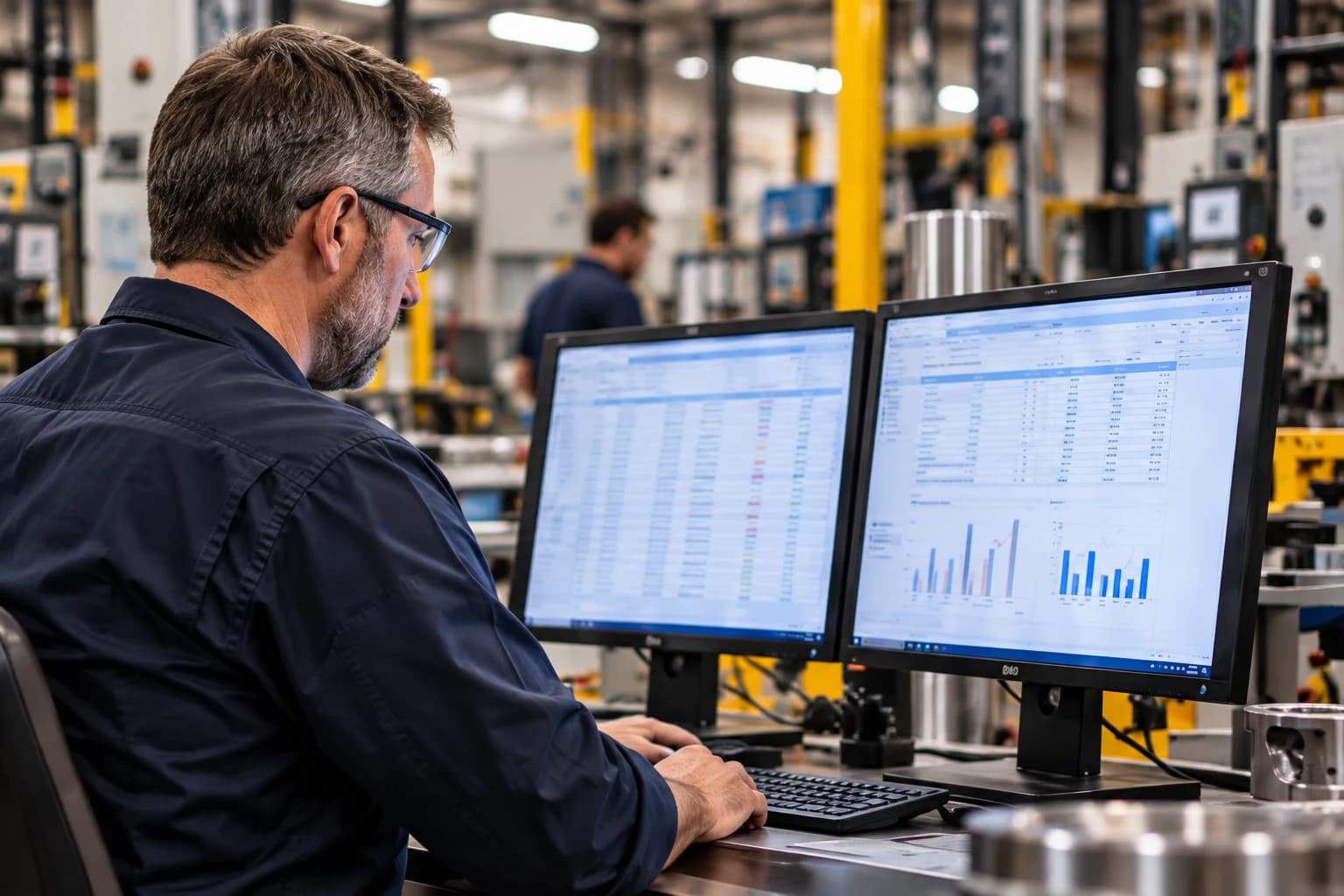
Work with your environment
Bring together ERP, MES, quality records, operator reporting, and approved equipment-data sources.
Metrotechs engineers the approved software connections, data collection, reporting, and workflows.
Operational Technology (OT) includes the systems that monitor or control physical production. IT/OT integration connects relevant information from that environment with manufacturing and business applications. Metrotechs implements the software connections, data collection, and workflows needed for the approved outcome, coordinating equipment or control-system dependencies with the appropriate specialists.
Qualified specialists own PLC and robot programming, machine-control and safety logic, and physical equipment installation and commissioning. Agree these dependencies and responsibilities before work begins.
ERP implementation and ongoing IT operations require their own approved scope. Client leaders retain business decisions and acceptance; delivery participants remain responsible for their assigned work.
Explore all software areasYour manufacturing Roadmap
Use Launchpad to assess, plan, and govern your manufacturing visibility project, with agreed production signals, system connections, and acceptance criteria.
Explore LaunchpadFree intake is preliminary. Client-specific Roadmaps and ongoing governance require a scoped, staff-governed paid engagement.
Start with a focused conversation about your operation.